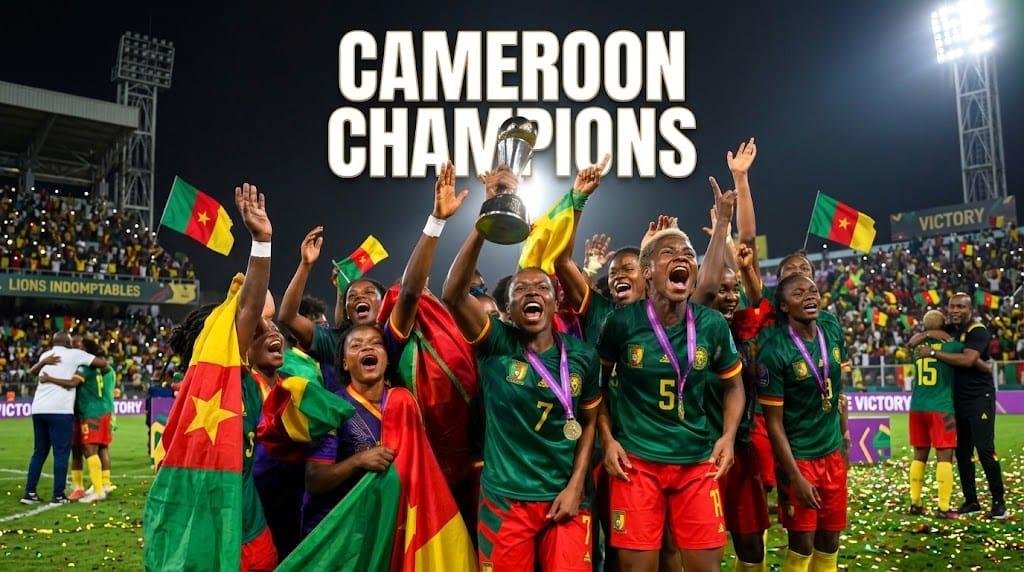
For more than two decades, Cameroon's women had been African football's great nearly-team. Three finals reached — 2004, 2014, 2016 — and three finals lost. A powerhouse by pedigree, a bridesmaid by record. On Sunday, 16 August 2026, in Rabat, that story finally changed.
The Indomitable Lionesses beat debutants Malawi 3-0 at the Prince Moulay El Hassan Stadium to win the Women's Africa Cup of Nations for the first time in their history — becoming only the fourth nation ever to lift the trophy, joining Nigeria, Equatorial Guinea and South Africa in African women's football's most exclusive club.
What makes the triumph remarkable isn't just the drought it ended. It's that Cameroon weren't even supposed to be in Morocco at all.
From the Outside Looking In
Cameroon initially failed to qualify for WAFCON 2026. Their lifeline came when CAF expanded the tournament from 12 teams to 16, opening a back door the Lionesses walked through — and then kicked down. A side making its 13th appearance at the finals, having missed only the previous edition, turned a second chance into a coronation.
That context frames everything about this campaign. This was not a favourite fulfilling expectations. It was a team that had to be let back in, seizing the moment as if it might never come again.
The Road Through Africa's Best
Cameroon's route to the title read like a gauntlet of the continent's heavyweights.
In Group D, they opened with a hard-fought 2-1 win over Mali, Marie Ngah Manga scoring in each half. They followed it with a statement 1-0 victory over Ghana — Ngah Manga again from the penalty spot — before resting players in a dead-rubber draw with Cape Verde to top the group.
Then the knockouts turned the campaign into something historic. In the quarter-final, Cameroon knocked out Nigeria — the ten-time champions and defending holders — with a 1-0 win. In the semi-final, they faced hosts Morocco — last edition's beaten finalists, roared on by a home crowd chasing a first title — and held them to a 0-0 draw before winning on penalties. Ousting the two sides that had contested the previous final, on the way to their own, is a claim few champions can make.