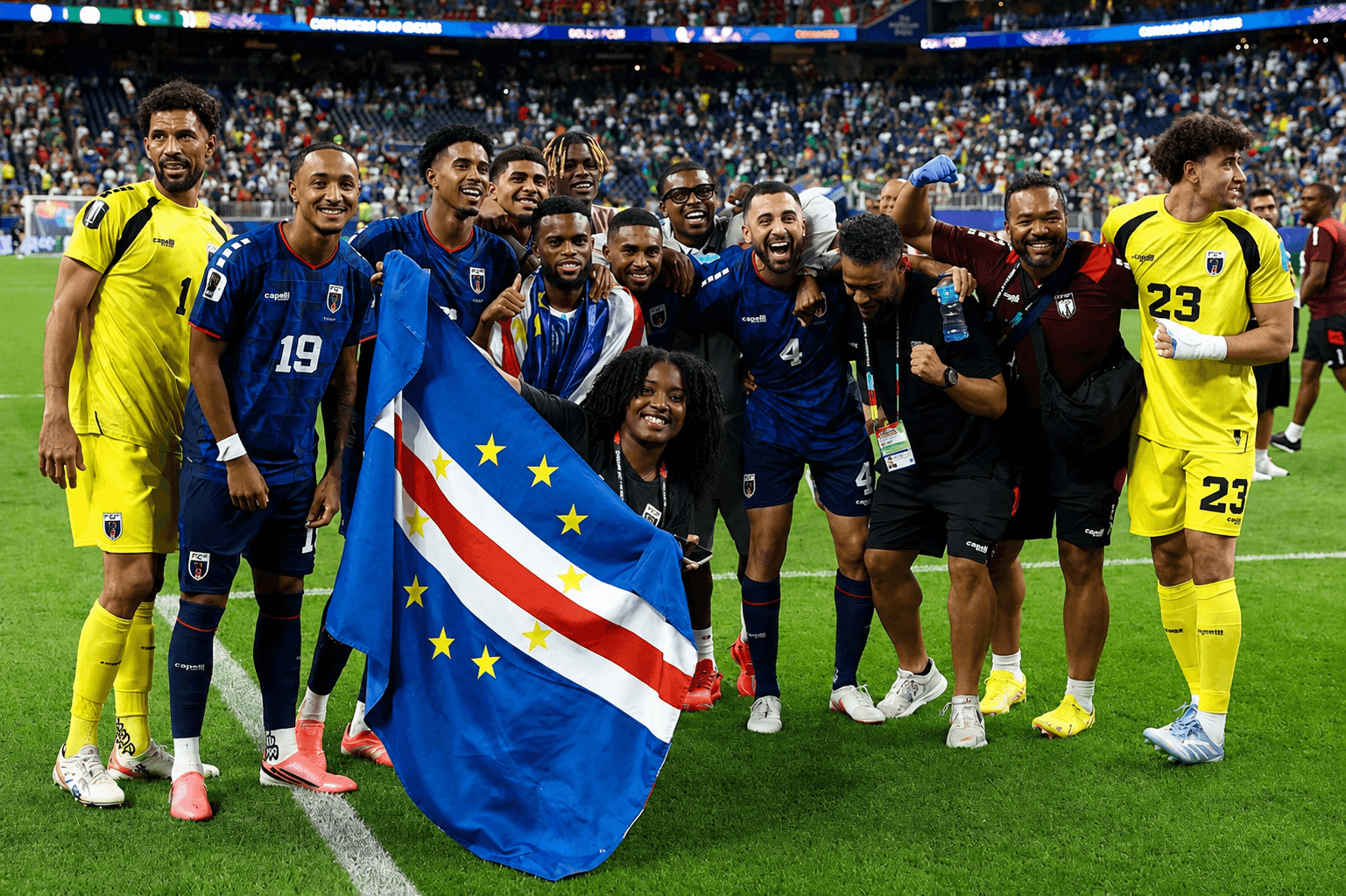
Picture a country smaller than most African cities, an island nation you could fit inside Lagos twice over, walking into the World Cup and knocking out Uruguay and Saudi Arabia without losing a single group game. That is not a movie script. That is Cabo Verde in the summer of 2026, and honestly, it might be the best thing to happen to African football in years.
A Nation the Size of a Suburb, Playing on the Biggest Stage
Cabo Verde has a population of roughly 590,000 people, smaller than many single neighborhoods in Nairobi or Accra. Yet the "Blue Sharks" became the third smallest nation ever to qualify for a World Cup, and instead of just showing up, they made noise. They finished their group stage unbeaten, a feat plenty of football giants failed to manage this tournament. For a country this size, that is not just sport. That is a statement to the whole continent about what's possible when talent and belief line up.
Why This Story Matters for African Football
This World Cup has genuinely been a moment for CAF nations. Nine of the ten African teams that qualified made it out of their groups, with only Tunisia missing the cut. Morocco pushed through to the Round of 16 with a nerve-shredding penalty win over the Netherlands, continuing their reputation for composure under pressure since their historic 2022 semifinal run. But it's Cabo Verde's story that has captured hearts, because it proves this isn't only about the continent's traditional football powers. Depth is growing everywhere, even in the smallest corners of the map.
The Diaspora Factor
Part of what makes Cabo Verde's run so special is the diaspora connection. Like much of Cabo Verdean life, the national team is shaped by players and communities spread across Portugal, France, the Netherlands, and the US. It's a reminder that African excellence isn't confined by borders. Wherever Cabo Verdeans have landed around the world, they've carried the island's culture, music (that unmistakable morna and coladeira rhythm), and now football pride with them. This World Cup run belongs just as much to the diaspora as it does to the ten islands back home.
A Tough Lesson for the Region's Bigger Names